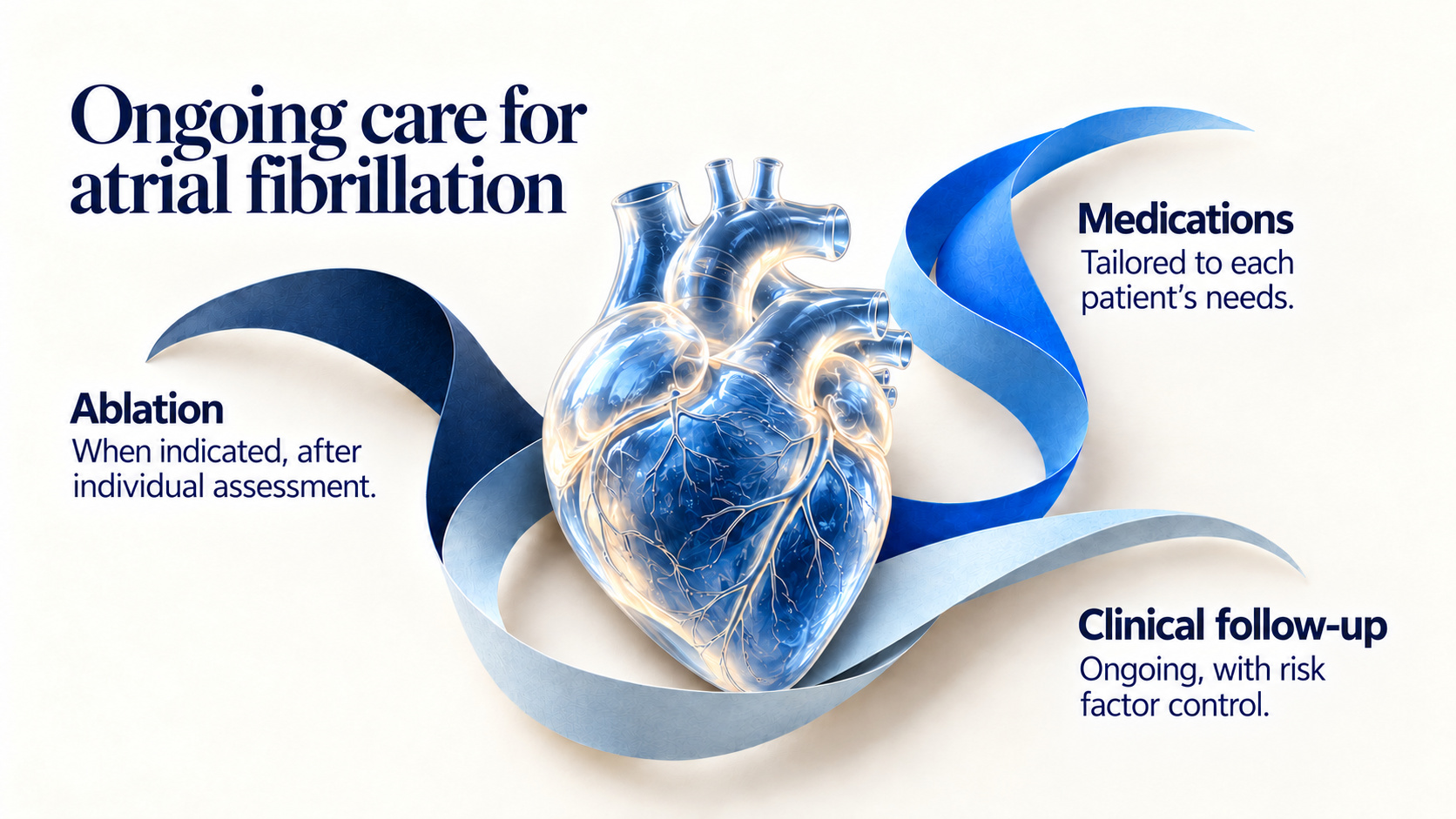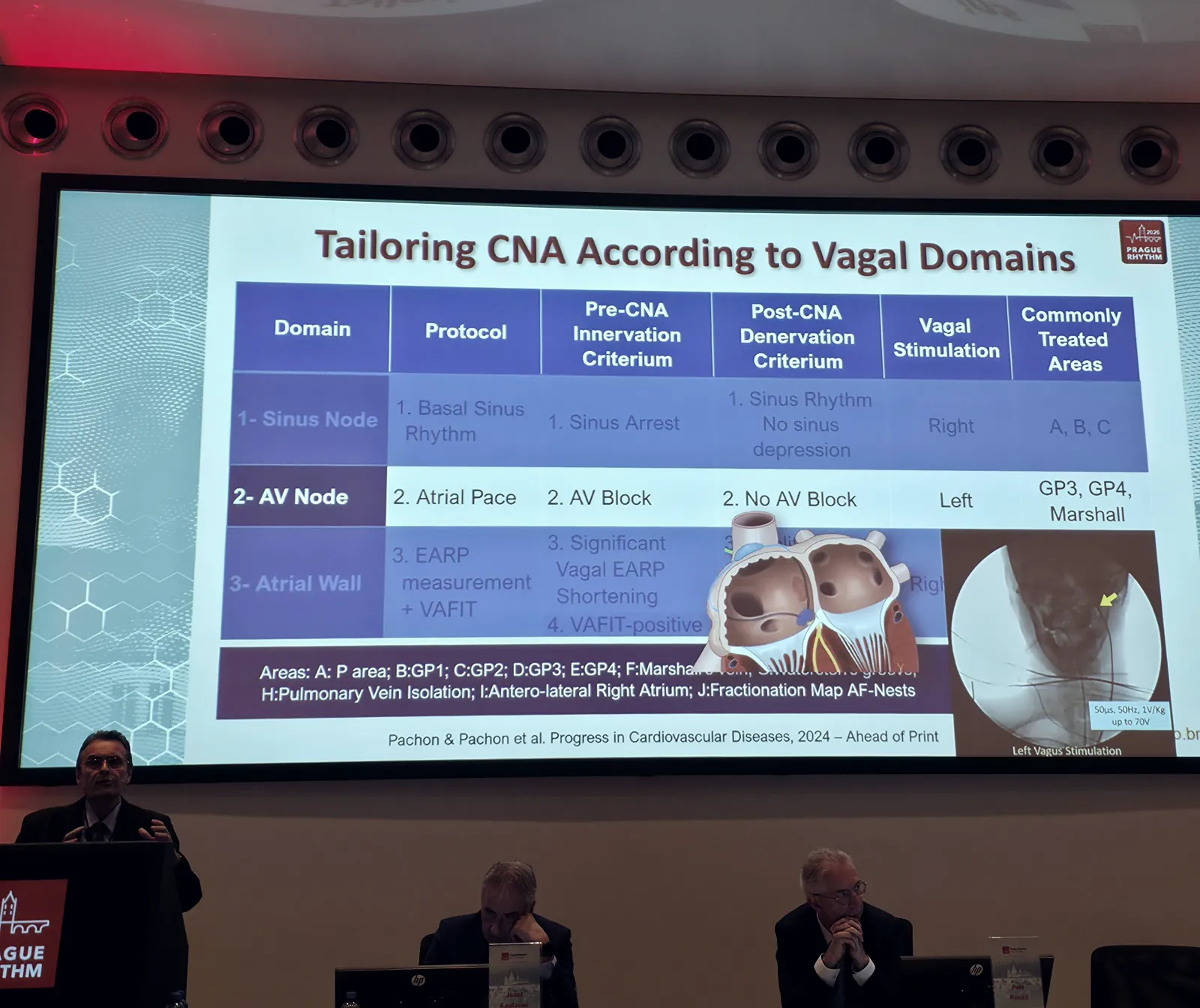




Joint evaluation by the clinical cardiologist and electrophysiologist can begin while treatment alternatives are still being considered.
What REAL-AF found
Published in July 2026 in JAMA Network Open, REAL-AF analyzed 3,724 patients undergoing first radiofrequency ablation. Atrial arrhythmia recurrences after the first 90 days occurred in 12.3% of those treated less than one year after diagnosis, 16.4% between one and four years, and 21.8% after five years or more. These are proportions observed during follow-up, whose window extended to 459 days.[1]
Atrial arrhythmia recurrence
Observed proportions by interval from diagnosis to ablation

3,724 patients. Recurrences after the initial 90-day period, within a follow-up window of up to 459 days. Percentages are crude proportions, not 12-month Kaplan–Meier estimates.
Prepared from REAL-AF, eTable 10.[1]
View figure data
| Diagnosis to ablation | Recurrences / patients | Proportion |
|---|---|---|
| Less than 1 year | 133 / 1,084 | 12.3% |
| 1 to 4 years | 303 / 1,843 | 16.4% |
| 5 years or more | 174 / 797 | 21.8% |
The association persisted in the adjusted model with 2,052 participants: HR 1.48 (95% CI 1.08–2.01) and 2.10 (95% CI 1.46–3.02), respectively, compared with the interval of less than one year. The study is observational, with missing data and nonuniform monitoring. It does not demonstrate causality or allow a reduction in mortality to be attributed to earlier treatment.[1]
The association after adjustment
Recurrence hazard ratio and 95% confidence interval

2,052 participants in the adjusted model. Points represent HR and lines the 95% CI. The reference is the group treated in less than one year. HR is a relative measure over follow-up, not an individual probability of recurrence.
Prepared from REAL-AF, eTable 7.[1]
View data and adjustment
| Diagnosis to ablation | Adjusted HR | 95% CI |
|---|---|---|
| Less than 1 year | 1.00 | Reference |
| 1 to 4 years | 1.48 | 1.08–2.01 |
| 5 years or more | 2.10 | 1.46–3.02 |
Model adjusted for age, sex, CHA₂DS₂-VASc, AF type, prior antiarrhythmic use/failure, left ventricular ejection fraction and low-voltage estimated scar burden, with physician-clustered errors.
I see these results as a reason to start the ablation conversation earlier. For the clinical cardiologist, I consider it important to include referral when rhythm control is under discussion. Consultation with an electrophysiologist allows expected benefit, risks and patient preferences to be evaluated, including when the final decision is to continue medication.
What the study does not allow us to conclude
Remodeling requires careful interpretation. The authors evaluated low-voltage areas as an estimate of atrial scar and found no statistically significant difference between groups. The method may underestimate diffuse fibrosis. REAL-AF therefore did not demonstrate that waiting produced fibrosis or that an earlier procedure would have prevented it.[1]
I also would not turn the “less than one year” category into a mandatory deadline for every patient.
Referral in clinical practice
Discussion of ablation can occur before successive antiarrhythmic trials in selected patients. The 2024 European guideline recommends ablation as an initial rhythm-control option in paroxysmal AF within shared decision-making. Symptoms, arrhythmia characteristics, comorbidities, expected benefit and procedural risk must be considered in this choice.[2]
When medication is chosen, I find it useful to agree from the outset on what will prompt reevaluation. Persistent symptoms, new recurrences or medication intolerance should bring the strategy back into discussion. I prefer follow-up with defined goals rather than leaving the possibility of ablation without a plan for reconsideration.
The clinical cardiologist’s work remains essential with any of these choices. Blood pressure control, weight management, sleep apnea evaluation, reduction of alcohol consumption and prevention of thromboembolic events are part of AF care. Ablation evaluation should be integrated with this treatment.[2]