
Cardiac arrhythmia treatment
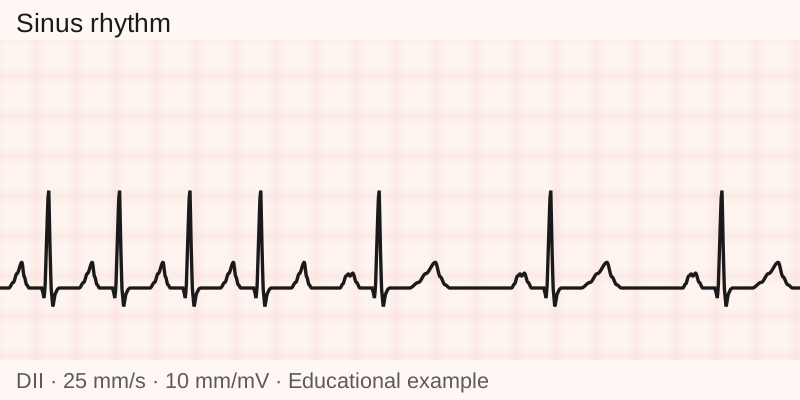
Supraventricular tachycardia and sinus rhythm. Educational example; it does not represent an individual patient's outcome.
Cardiac arrhythmia treatment may involve follow-up, care for causes and risk factors, medicines, procedures or devices. The choice starts with the diagnosis and what the treatment aims to achieve: relieve symptoms, control the heartbeat and, when necessary, prevent complications. [1,2]
How treatment is chosen
An arrhythmia is a change in the rate or pattern of the heartbeat: the heart may beat too fast, too slowly or irregularly. [3]
Symptoms are part of the assessment, along with the risks associated with the rhythm change and health conditions. Palpitations are sensations of a racing heart, strong beats or “skipped” beats; this perception alone does not confirm an arrhythmia. For this reason, not feeling palpitations is not enough to decide whether treatment is needed. [1,3]
At your appointment, ask what the plan aims to achieve, what the alternatives are and how follow-up will work. Controlling the heart rate, restoring the rhythm and preventing a complication may require different measures. [1]
Integrated cardiac care
Our team considers it essential to integrate the treatment of arrhythmias with cardiac evaluation and clinical care that are tailored to each person. This approach takes into account cardiovascular health as a whole and the needs of each individual.
In selected patients with atrial fibrillation and risk factors, addressing these factors and other health problems together through individualized care may help relieve symptoms and reduce the chance of the arrhythmia returning after ablation. This combined approach complements the recommended treatments. [7,15]
Cardiac arrhythmia treatment
Follow-up and addressing causes
After assessment, some people may continue with follow-up without needing medicines for the arrhythmia or a procedure. The plan includes reassessments according to the person's condition; the choice should not be based only on the presence or absence of symptoms. [1,3,14]
It may also be necessary to investigate and address conditions that contribute to the problem, such as thyroid disorders, changes in blood salts or the effects of medicines. The cause is not always identified. Tell the team about all the medicines and supplements you take. [2,4,6]
Lifestyle and risk factors
A balanced diet, physical activity suited to your assessment, not smoking and managing weight and blood pressure are part of cardiovascular care. Alcohol consumption and possible triggers for episodes should also be discussed. These measures accompany the plan without guaranteeing that an arrhythmia will disappear. [1,2,4]
Coffee and exercise do not require the same advice for everyone. In atrial fibrillation (AF), a type of arrhythmia, giving up caffeine is not universally recommended to prevent episodes. If consumption seems to worsen symptoms, discuss an adjustment. [3,5]
Assessment of breathing problems during sleep, such as sleep apnea, may also form part of AF care. However, the effect of treating sleep apnea on maintaining a normal rhythm remains uncertain. [5]
Medicines with different goals
Some medicines slow the heartbeat; others help control episodes or maintain the rhythm. The choice takes the arrhythmia and health conditions into account, with monitoring of the response and unwanted effects. Some medicines can even cause or worsen arrhythmias. [6]
Anticoagulants have a different purpose. In AF, they may be indicated to reduce the risk of blood clots and stroke, according to individual risk and an assessment of bleeding risk. They do not correct the rhythm. Improvement in symptoms or apparent success after ablation does not automatically mean that this treatment can be stopped. [7]
Cardioversion and ablation
Cardioversion aims to restore a normal rhythm. It may use medicines or electricity; electrical cardioversion uses a controlled shock. Afterwards, other measures may be needed to maintain the rhythm. The team determines when it is appropriate and the precautions needed to reduce risks, such as blood clots in the context of AF. [8]
In catheter ablation, thin tubes are guided through blood vessels to the heart to treat areas involved in the arrhythmia. There are risks, such as bleeding and injury to the heart or blood vessels. The benefits, specific risks and possibility of recurrence need to be discussed according to the diagnosis. [7,9,14]
When a device may help
Devices have different functions, and their use requires assessment:
- A pacemaker delivers electrical impulses to help the heart in selected cases of a slow heartbeat or a block in electrical conduction. [10]
- An implantable cardioverter defibrillator, or ICD, detects and treats potentially serious ventricular arrhythmias, which start in the lower chambers of the heart, in people for whom the device is indicated. It can deliver electrical therapies to stop them. [11]
- Cardiac resynchronization therapy uses pacing to improve coordination of the contraction of the ventricles, the lower chambers, in selected patients with heart failure. [12]
Ask about the expected benefits, the risks of implantation and how follow-up will work. [12]
When to seek immediate medical attention
If you have palpitations accompanied by chest pain, shortness of breath, dizziness, fainting or feeling faint, seek immediate medical attention. If these symptoms have already stopped, an urgent assessment is still necessary. [3]
In an emergency in Brazil, call SAMU on 192. Sudden chest pain or signs of stroke, such as a sudden change in speech or loss of strength on one side of the body, also require emergency medical attention. Do not wait for a response from the appointment scheduling channel. [13]
Frequently asked questions
Can an arrhythmia be cured?
Do I need to try medicines before ablation?
Discuss your care plan
Bring the available test results, records of episodes and your list of medicines. Discuss the diagnosis, expected benefits, risks, alternatives and follow-up. [6,8,14]
References
- American Heart Association. Prevention and Treatment of Arrhythmia.
- National Heart, Lung, and Blood Institute. Arrhythmias: Treatment.
- National Health Service. Heart rhythm problems (arrhythmia).
- National Heart, Lung, and Blood Institute. Arrhythmias: Causes and Triggers.
- Joglar JA and colleagues. ACC/AHA/ACCP/HRS guideline on atrial fibrillation, 2023. Circulation. 2024;149:e1–e156.
- American Heart Association. Medications for Arrhythmia.
- Van Gelder IC and colleagues. ESC guideline on atrial fibrillation, 2024. Eur Heart J. 2024;45:3314–3414.
- American Heart Association. Cardioversion.
- American Heart Association. Ablation for Arrhythmias.
- American Heart Association. Pacemaker.
- American Heart Association. Implantable Cardioverter Defibrillator (ICD).
- Chung MK and colleagues. HRS/APHRS/LAHRS guideline on cardiac physiologic pacing, 2023.
- Ministry of Health. SAMU 192.
- Brugada J and colleagues. ESC guideline on supraventricular tachycardias, 2019. Eur Heart J. 2020;41:655–720.
- Pathak RK, Elliott AD, Lau DH, et al. Aggressive Risk Factor Reduction Study for Atrial Fibrillation Implications for Ablation Outcomes: The ARREST-AF Randomized Clinical Trial. JAMA Cardiology. 2025. DOI: 10.1001/jamacardio.2025.4007.