
Who created cardioneuroablation?
Cardioneuroablation was created by José Carlos Pachón's group, with Enrique Pachón and collaborators, in São Paulo. The original description was published in January 2005 in Europace. The 2024 scientific statement from the EHRA, HRS, APHRS and LAHRS societies recognizes that the technique was introduced by Pachón and colleagues.[1][2]
The group continued to study clinical outcomes and develop ways to locate cardiac innervation and assess the effect of ablation.
Europace · 2005 · volume 7, pages 1 to 13
José C. Pachon, Enrique I. Pachon, Juan C. Pachon, Tasso J. Lobo, Maria Z. Pachon, Remy N. A. Vargas and Adib D. Jatene. Original publication on cardioneuroablation for neurocardiogenic syncope, functional atrioventricular block and sinus node dysfunction.
View the original article on PubMedOriginal description. The Pachón group presents cardioneuroablation and the use of spectral analysis of cardiac signals to guide ablation.[1]
Long-term follow-up. The group publishes a series of patients treated for severe reflex syncope.[3]
Extracardiac vagal stimulation. Publication of the method for comparing the vagal response before and after ablation.[4]
International scientific discussion. Four arrhythmia societies bring together evidence, selection criteria and questions still being studied.[2]
Who is part of the cardioneuroablation program today
Meet the Pachón group cardioneuroablation program team.[8]
- Prof. Dr. José Carlos Pachón Mateos ORCID
- Prof. Dr. Enrique I. Pachón Mateos ORCID
- Dr. Carlos Thiene Cunha Pachón ORCID
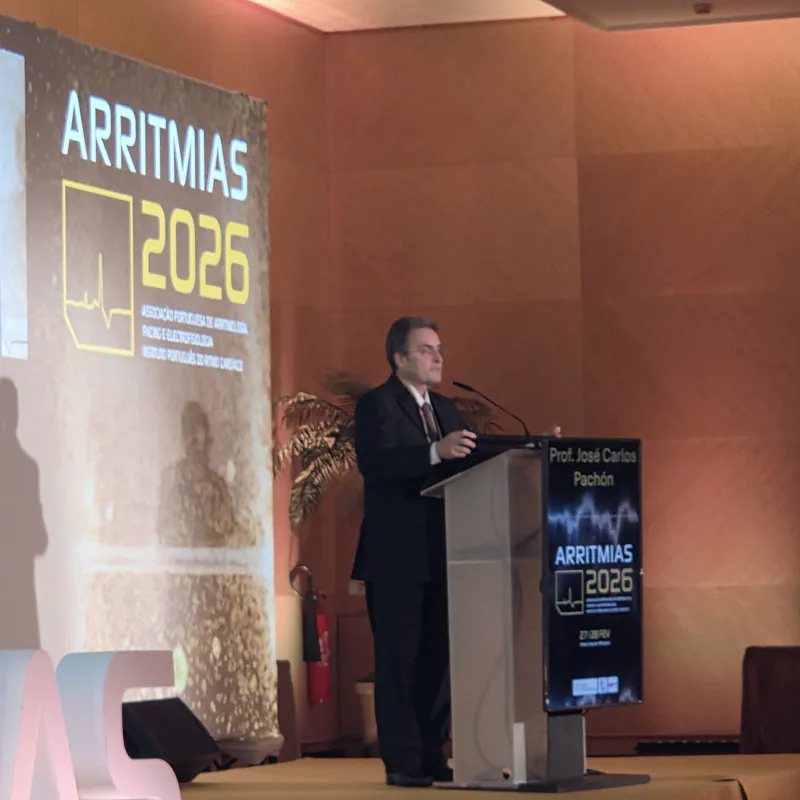
Prof. José Carlos Pachón Mateos at Arritmias 2026 in Cascais, Portugal.
Learn about the international programWhat does cardioneuroablation do in the heart?
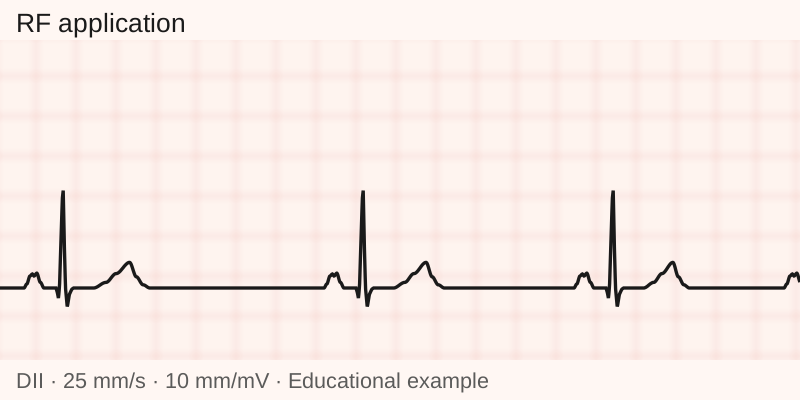
The vagus nerve helps control heart rate. In some people, an exaggerated reflex causes the heart to slow greatly or pause during syncope. Cardioneuroablation acts on regions related to ganglionated plexi, small groups of nerve cells associated with the atria, to reduce this response.[1][5]
The procedure, also called cardioneuroablation or CNA in the international literature, is performed by catheter. It does not cut the vagus nerve in the neck or leave an implanted pacemaker. It modifies the nerve's influence on the heart.
The mechanism of syncope matters. In vasovagal syncope, blood pressure can also fall. Cardioneuroablation aims to treat the component involving cardiac slowing or pauses; it does not necessarily eliminate the fall in blood pressure. When this vasodepressor component predominates, the 2024 international statement does not consider the technique an appropriate option.[2]
When should cardioneuroablation be considered?
The main situation studied is severe, recurrent reflex syncope with a documented cardioinhibitory component, meaning syncope accompanied by marked cardiac slowing or a pause. The evidence focuses on selected, generally younger people with severe episodes and documented cardiac pauses who remain symptomatic despite conventional measures. A slow rate without pauses, including on tilt testing, is not enough to indicate the procedure.[2][6]
The consultation relates the history of syncope to ECG, Holter or other rhythm recordings, tilt testing and echocardiography. In some cases, longer rhythm monitoring or tests of the autonomic response, such as the atropine test, help clarify the mechanism of syncope. Each test depends on the clinical question. A positive tilt test alone does not establish the indication.[2]
The group has also published studies on functional atrioventricular block and sinus node dysfunction related to the vagus nerve. These situations require especially careful selection. The 2024 statement considers use in these conditions investigational and recommends evaluation in controlled studies.[2][9]
When is a pacemaker still needed?
Intrinsic sinus node or electrical conduction disease may require a pacemaker. A pacemaker may also be indicated in selected people with severe, recurrent and unpredictable reflex syncope when documented cardiac pauses play an important role in the episodes, especially above 40 years of age. Cardioneuroablation does not repair a diseased conduction system. Before considering an alternative, the reason for the device indication and the quality of evidence for each option must be discussed, without delaying an implant with an established indication.[2][5]
Options also include guidance on triggers, physical and lifestyle measures, medication adjustments and specific treatments. Hydration and increased salt intake, for example, must take conditions such as hypertension and heart failure into account. Do not stop a prescribed treatment while waiting for evaluation.
How is cardioneuroablation performed?
In the Pachón group program, the procedure is performed in an electrophysiology laboratory, usually under general anesthesia. Catheters are introduced through veins, generally in the groin. The technique requires vascular punctures, but not opening the chest.[8]
-
Map the signals
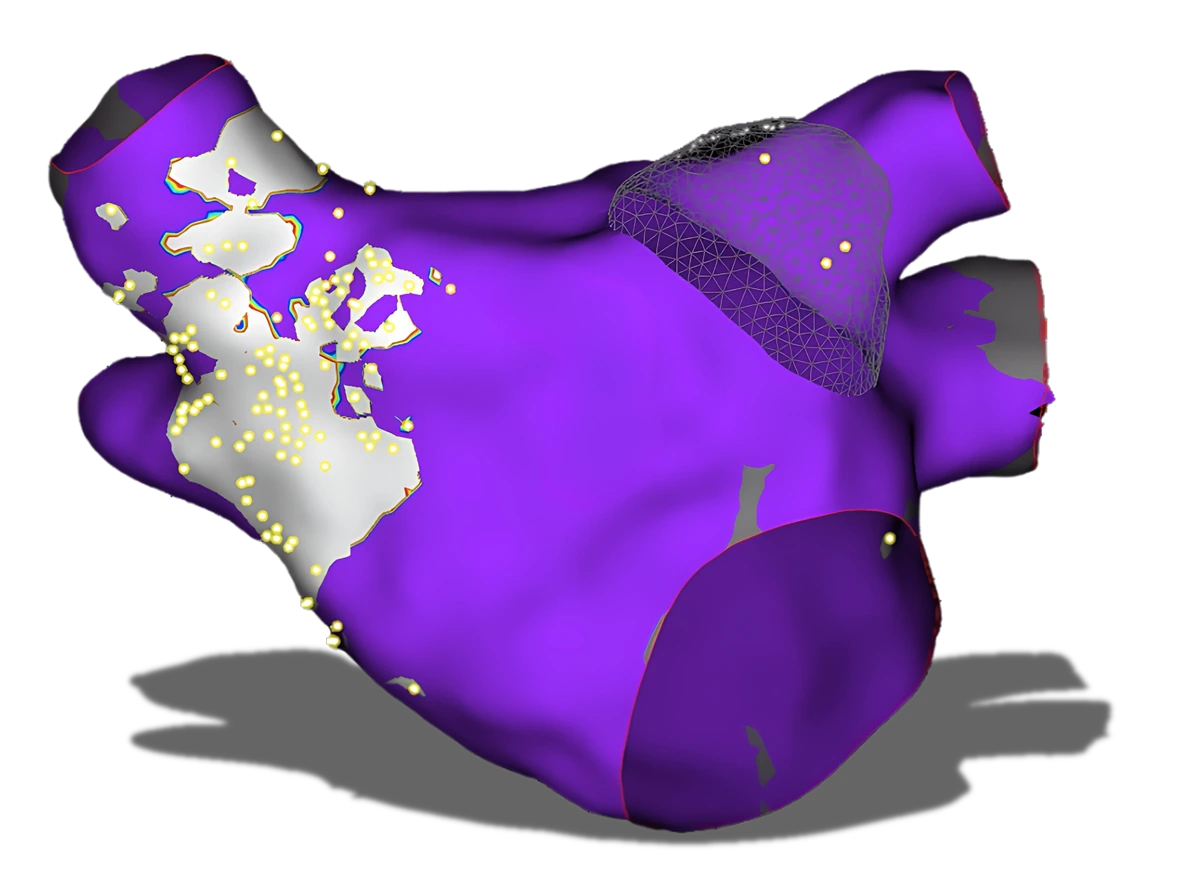
The three-dimensional map and analysis of electrical signals help identify regions related to cardiac innervation. Spectral analysis is part of the group's original description; fractionation mapping was studied in later work.[1][5][10]
-
Apply radiofrequency
Energy is applied to selected regions of the atria to reduce vagal influence. Access and the extent of ablation depend on the clinical situation and the strategy defined by the team.[5]
-
Assess the vagal response
Extracardiac vagal stimulation allows the heart's response before and after ablation to be compared. The Pachón group published this method in 2015. The test helps assess the effect during the procedure; the clinical outcome is monitored over time.[4][10]
In the Pachón group cardioneuroablation program, the procedure usually lasts two to three hours. This time varies according to the case. Preparation, anesthesia and hospital stay are determined after evaluation. Fasting and medication use must follow the instructions received from the team.[8]
What do studies show?
The literature includes studies by the group that created the technique, research from other centers and clinical trials. There are favorable results in selected patients, but studies differ in patient profiles, technique and follow-up duration. Cardioneuroablation remains a treatment in development.[2][3][6]
Syncope over two years
Piotrowski and colleagues · JACC: Clinical Electrophysiology, 2023 · 48 participants, mean age 38 years, randomly assigned to two groups.[6]
Syncope recurred in 2 participants after ablation and in 13 in the comparison group. The study included people with documented cardioinhibitory or mixed syncope and a positive response to the atropine test.
A small, open-label study without a sham procedure. These results are not a SEMAP success rate or an individual prediction. The publication calls for larger studies to confirm the findings.
Studies in 2025 and 2026 expanded cardioneuroablation follow-up in different centers and compared ways of performing the procedure. Results vary according to patient selection, technique and follow-up duration. Comparing two ablation techniques does not in itself demonstrate an advantage over conventional treatment or pacemakers. A study result does not predict each person's outcome.[11][12][13]
The 2024 EHRA, HRS, APHRS and LAHRS statement brings together evidence, selection criteria and questions that still need clarification. Appropriate selection and long-term follow-up remain essential.[2]
Risks, recovery and follow-up
Cardioneuroablation is invasive. It can cause bleeding or a hematoma at the vascular access site, thromboembolism, heart injury or perforation, and anesthesia complications. Blood accumulating around the heart can compress it, a condition called tamponade, and require drainage or surgery. Injury to nearby nerves or the heart's electrical system can also occur, sometimes requiring a pacemaker. The team should explain the risks of the proposed strategy and how these complications are treated.[2][11]
An increased heart rate deserves attention: it can cause persistent palpitations and, in some patients, require treatment. Syncope can also recur, including because of persistent blood pressure drops or recovery of some nerve influence. In selected cases, repeat ablation or pacemaker implantation may be needed.[7]
The effects of a lasting reduction in vagal influence on cardiovascular health are not yet fully understood. This uncertainty reinforces the importance of long-term follow-up.[2]
After the procedure, patients are observed in hospital and reassessed before discharge. Instructions on dressings, physical effort, return to work, driving and travel are individualized. Depending on the technique and clinical conditions, medication may be needed for a period; the team advises on its use and duration. Do not change a prescription on your own. Follow-up considers symptoms, heart rate and tests when needed.[2]
When to seek immediate care
Syncope with chest pain, significant shortness of breath, sudden weakness or incomplete recovery requires urgent evaluation. After the procedure, significant bleeding or sudden worsening also requires immediate care. In Brazil, call SAMU 192; in another country, contact the local emergency service. WhatsApp is intended for scheduling.
For people coming from another city or country
The evaluation may begin with a review of the medical history and tests by teleconsultation, depending on the conditions of care. The cardioneuroablation program provides care in Portuguese, English and Spanish. Patients from Brazil, other South American countries, the United States and Europe can arrange an evaluation before planning travel.[8]
Procedures in the cardioneuroablation program are performed at HCor and Hospital Sírio-Libanês in São Paulo. The hospital, responsible team, cost estimate and schedule are determined for each case. Health plan or insurance coverage must be confirmed directly with the provider.[8]
Return to the city or country of origin depends on clinical progress and medical clearance. People coming from afar should arrange follow-up with their local cardiologist and allow room for changes in the return date.
Frequently asked questions
Can cardioneuroablation avoid a pacemaker?
It may be an alternative in selected situations where vagal influence plays a determining role. Some people with severe reflex syncope and documented pauses also have an indication for a pacemaker; CNA is not an automatic substitute. A functional reflex must be distinguished from disease of the heart's electrical system. For vagal sinus node dysfunction and atrioventricular block, the 2024 international statement considers this application investigational, in controlled studies.[2][9]
Can every vasovagal faint be treated this way?
No. Many patients improve with conventional measures, and some episodes depend mainly on a fall in blood pressure. The decision requires relating episodes to heart rhythm and evaluating the role of each mechanism.[2]
Is cardioneuroablation the same as atrial fibrillation ablation?
They are procedures with different goals. Cardioneuroablation seeks to modify autonomic influence on the heart. Atrial fibrillation ablation treats mechanisms of that arrhythmia, often through pulmonary vein isolation. Research relates the two approaches, but an indication for one does not imply an indication for the other.[5]
Can syncope return?
Yes. The response can be incomplete and symptoms can return. It is necessary to investigate whether an episode results from a fall in blood pressure, a new pause or another cause. Follow-up therefore continues even when the person starts feeling well.[7]
How much does it cost and how long do I need to stay in São Paulo?
The cost estimate depends on the evaluation, hospital and planned materials. Hospital stay and time in the city vary with clinical progress and fitness to travel. Request an individual plan before buying tickets; there is no discharge or return date that applies to everyone.
Which tests should I bring to the first evaluation?
If available, gather ECG, Holter, tilt test and echocardiogram results, reports from prior care and a list of medications in use. Complete tracings are helpful in addition to reports. Also note how the episodes begin, how often they occur and whether they caused falls or injuries. The team will advise which additional tests are needed.
Evaluation for cardioneuroablation
At the consultation, bring your tests and previous treatments and describe the fainting episodes. The team will discuss treatment options, potential benefits and risks in your case.
Request an evaluation via WhatsApp+55 11 92137-6068 · Scheduling channel.
For international inquiries: international@pachon.com.br.
São Paulo, SP, Brazil · Postal code 04013-000.
Portuguese · English · Spanish
Articles and sources for this page
The references below allow readers to check the origin of the technique and distinguish clinical studies from information about the service. Numbering follows the statements throughout the page.
- Pachon JC et al. Original cardioneuroablation publication. Europace. 2005;7(1):1–13. DOI: 10.1016/j.eupc.2004.10.003. PMID: 15670960. Initial description and authorship of the technique.
- Aksu T et al. Scientific Statement EHRA, HRS, APHRS and LAHRS. Europace. 2024;26(8):euae206. DOI: 10.1093/europace/euae206. PMID: 39082698. History, selection, evidence and limitations.
- Pachon JC et al. Cardioneuroablation long-term results. Europace. 2011;13(9):1231–1242. DOI: 10.1093/europace/eur163. PMID: 21712276. Group series with long-term follow-up.
- Pachon M JC et al. Simplified Method for Vagal Effect Evaluation in Cardiac Ablation and Electrophysiological Procedures. JACC Clin Electrophysiol. 2015;1(5):451–460. DOI: 10.1016/j.jacep.2015.06.008. PMID: 29759475. Extracardiac vagal stimulation method.
- Pachon JC et al. Cardioneuroablation: Where are we at? Heart Rhythm O2. 2023;4(6):401–413. DOI: 10.1016/j.hroo.2023.02.007. PMID: 37361615. Review of the method and questions under investigation.
- Piotrowski R et al. Cardioneuroablation for Reflex Syncope: Efficacy and Effects on Autonomic Cardiac Regulation. A Prospective Randomized Trial. JACC Clin Electrophysiol. 2023;9(1):85–95. DOI: 10.1016/j.jacep.2022.08.011. PMID: 36114133. Trial of 48 participants with two years of follow-up.
- Kulakowski P et al. Cardioneuroablation for reflex asystolic syncope: Mid-term safety, efficacy, and patient's acceptance. Heart Rhythm. 2024;21(3):282–291. DOI: 10.1016/j.hrthm.2023.11.022. PMID: 38036236. Recurrence and adverse effects during follow-up.
- Pachón group cardioneuroablation program. Institutional source consulted on 29/09/2026: team, photographs, contact, place of care and organization of the international program.
- Pachon-M JC et al. Treatment of Symptomatic Functional Atrioventricular Block by Cardioneuroablation as an Alternative to Pacemaker Implantation. JACC Case Rep. 2022;4(15):990–995. DOI: 10.1016/j.jaccas.2022.04.029. PMID: 35935156. Case report of a patient with functional atrioventricular block; it does not establish a general indication.
- Pachon-M EI et al. Relation of Fractionated Atrial Potentials With the Vagal Innervation Evaluated by Extracardiac Vagal Stimulation During Cardioneuroablation. Circ Arrhythm Electrophysiol. 2020;13(4):e007900. DOI: 10.1161/CIRCEP.119.007900. PMID: 32188285. Mapping and assessment of the vagal effect.
- Tung et al. North American multicenter registry of cardioneuroablation. JACC Clin Electrophysiol. 2025. Observational study with heterogeneous techniques and profiles; it does not randomly compare CNA with pacemakers or conservative treatment.
- Tu et al. Trial of left-sided versus biatrial cardioneural ablation. 2025. Compares two technical CNA strategies, not CNA against conventional treatment or pacemakers.
- Vojnika et al. Markers of autonomic denervation and recurrence after CNA. JACC Clin Electrophysiol. 2026. Retrospective cohort; recurrences reinforce the need for follow-up and caution in individual prediction.